
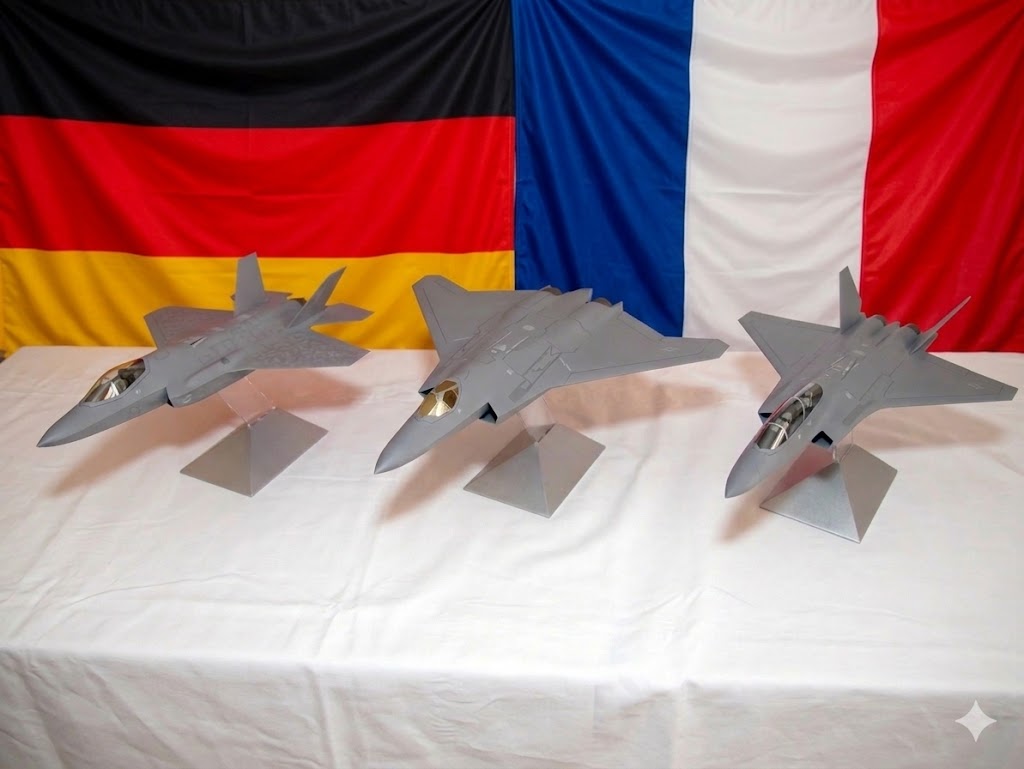
Efforts to enhance European defense collaboration have suffered a blow as France and Germany decided to terminate their joint fighter jet initiative, the Future Combat Air System (FCAS). The project, initiated in 2017 under the leadership of French President Emmanuel Macron and then-German Chancellor Angela Merkel, aimed to create a cutting-edge fighter aircraft to eventually replace France’s Rafale jets and the Eurofighter fleets used by Germany and Spain around the year 2040.
The FCAS project faced continuous hurdles due to unresolved disputes between the involved companies, particularly France’s Dassault Aviation and Airbus, which represented German and Spanish interests. The core disagreements revolved around leadership roles, intellectual property rights, and the management structure of the program. Dassault was keen on taking the lead in the jet’s development to protect its technological interests, whereas Airbus pushed for an equitable partnership with shared technological access among the participating nations.
Compounding these corporate disagreements were diverging national priorities. France advocated for a fighter jet with capabilities to carry nuclear weapons and operate from aircraft carriers, aligning with its military strategy, while Germany’s requirements for the aircraft differed significantly. Despite several political interventions to salvage the collaboration, including recent mediation attempts, the involved parties could not reconcile their differences, leading to the project’s termination.
Although the fighter jet development has been scrapped, portions of the broader FCAS initiative might still proceed. European officials have suggested that work could continue independently on associated technologies, such as advanced drones and a secure combat data network intended to link aircraft and military systems. These components could persist as separate projects, maintaining some momentum within the broader defense goals.
The dissolution of the joint fighter jet program underscores the challenges of achieving defense integration within Europe and highlights the complexities of managing large-scale military projects across multiple countries and industries. The failure to advance the FCAS as initially envisioned presents a significant setback, emphasizing the difficulties in aligning diverse strategic and industrial interests in multinational defense ventures.