
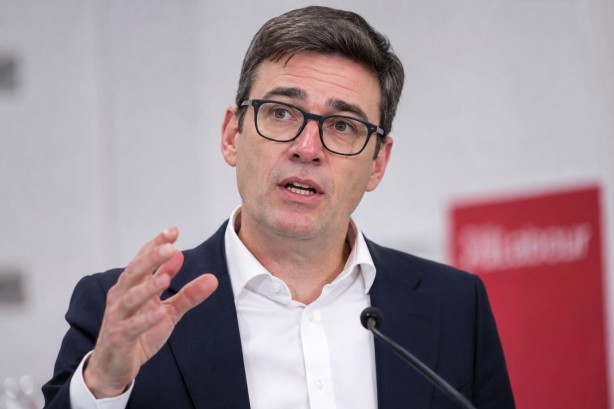
As Andy Burnham steps into the role of the UK’s prime minister on Monday, he has vowed to bridge the divides within the Labour Party. Following his confirmation as Labour’s leader, Burnham committed to establishing a unified government with a focus on addressing pressing national issues such as social care, housing, and the escalating cost of living. He characterized this transition period as pivotal for British politics, dubbing it Labour’s “last chance” to effect substantial change.
Burnham has laid out ambitious plans that include broadening public ownership, boosting the availability of council housing, and reforming social care systems, all while underscoring the need for his administration to maintain a pro-business stance. The details of his cabinet appointments, however, remain a subject of speculation, particularly the role of chancellor. Shabana Mahmood is currently the front-runner for the position, surpassing former party leader Ed Miliband, although her potential appointment has stirred debate within the party ranks.
Burnham is anticipated to reveal his cabinet selections after officially assuming office, with an emphasis on domestic policy and regional development across the United Kingdom. He has highlighted the significance of party cohesion, asserting that Labour must steer clear of internal conflicts to effectively tackle the nation’s economic and social issues.
His declarations come at a time when Labour is under intense scrutiny, and Burnham’s leadership is seen as a critical opportunity to solidify the party’s standing. Amidst a backdrop of economic challenges and social inequalities, the new prime minister’s agenda is closely watched both within the political sphere and by the public, all of whom are eager to see how these proposed changes unfold under his leadership.