
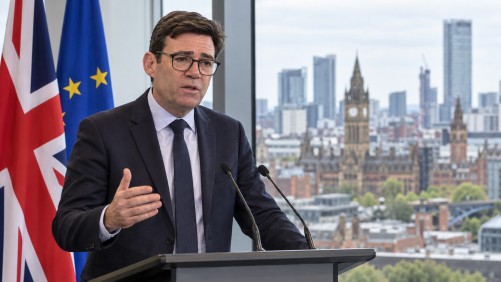
As the United Kingdom prepares for a pivotal summit in Brussels on November 20, Prime Minister Andy Burnham is urging the government to engage in meaningful discussions about the nation’s future relationship with the European Union. Burnham has emphasized the need for a pragmatic approach to enhance cooperation in areas such as economic growth, immigration management, and security, as the current post-Brexit arrangements are seen as inadequate.
In his address to Parliament, Burnham highlighted the upcoming summit as a crucial opportunity to explore a closer partnership with the EU. The meeting is set to focus on key agreements that could bolster the UK economy by an estimated £10 billion annually. These agreements are expected to cover aspects like food and drink trade, youth mobility, and emissions trading.
While the prime minister made it clear that the government does not intend to reverse the Brexit outcome, he stressed the importance of seizing opportunities to strengthen ties with Europe. Burnham also ruled out a return to free movement, opting instead for improved cooperation on migration and border security. He pointed out that the immediate priority should be to secure practical agreements at the forthcoming summit, while also considering the long-term relationship with the EU.
However, several challenges loom over the negotiations. The proposed youth mobility scheme, which aims to allow younger citizens of Britain and the EU to live, work, or study in each other’s countries temporarily, faces hurdles regarding eligibility, participation limits, and tuition fees. Additionally, the EU’s “Made in Europe” initiative, aimed at bolstering European manufacturing in strategic industries, raises concerns among UK manufacturers about potential barriers to including British components in European supply chains.
Burnham acknowledged these risks and advocated for an arrangement that benefits both sides, especially in light of competition from China. He also addressed allegations of Russian interference in the 2016 Brexit referendum, asserting that Russian actors attempted to meddle in British elections, though he provided no evidence that this affected the referendum’s outcome. The government continues to uphold the referendum result as legitimate.
The November summit will test the ability of the UK and EU to rebuild trust and forge agreements on shared priorities. While there is potential for immediate progress, significant disagreements could hinder efforts to establish a more robust long-term partnership.