
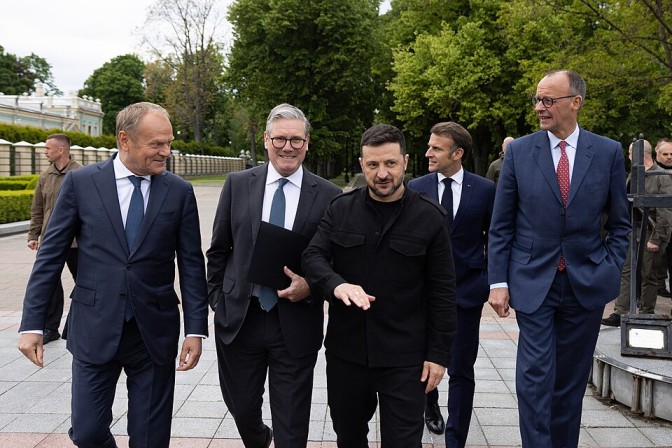
In a move that has garnered widespread attention, British Prime Minister Keir Starmer has announced his resignation, prompting European leaders to express their admiration for his contributions to strengthening UK-Europe relations. His decision has also led to the postponement of the much-anticipated EU-UK summit. Starmer was notably recognized for his efforts in enhancing collaboration on security matters and extending support to Ukraine, a sentiment echoed by several European dignitaries.
Ursula von der Leyen, President of the European Commission, extended her gratitude to Starmer for his pivotal role in bolstering both European and Ukrainian security. She emphasized that his tenure had significantly improved cooperative efforts between the UK and the EU. Similarly, António Costa, President of the European Council, expressed hope that Starmer’s successor would persist in the mission of fortifying the ties between Britain and the European Union.
The EU-UK summit originally slated for July 22 was set to address crucial issues such as trade agreements, youth mobility, and climate policy collaboration. Despite the leadership transition in the UK, officials have reassured that the commitment to advancing relations remains steadfast, underscoring the importance of continued dialogue and cooperation.
Beyond Europe, Starmer’s resignation has sparked reactions from international figures. Ukrainian President Volodymyr Zelenskyy lauded Starmer’s unwavering support, noting that their partnership had significantly contributed to European security. Germany also recognized Starmer as a dependable ally, especially concerning foreign policy and matters related to Ukraine.
Notably, former U.S. President Donald Trump offered his well-wishes while critiquing Starmer’s stances on immigration, energy policy, and some international decisions. Meanwhile, leaders from Australia and Norway acknowledged the complexities inherent in political leadership, extending their support to Starmer during this transitional phase.