
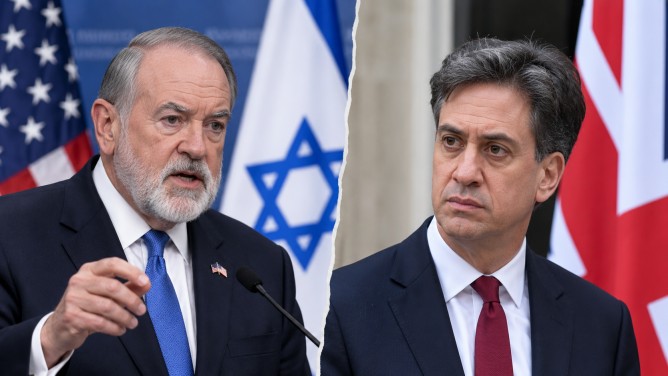
The US Ambassador to Israel, Mike Huckabee, has leveled serious accusations against UK Foreign Secretary Ed Miliband, labeling his concerns over restricted access to Gaza as “Jew hate.” Miliband had recently expressed alarm over reports from aid workers in Gaza about dire conditions, including incidents where children are reportedly dying due to the lack of essential medical treatment. He urged the UK government to take a more assertive stance in alleviating the humanitarian crisis in the region.
In response to Miliband’s comments, Huckabee dismissed them as baseless, accusing the British government of making unfounded allegations against Israel. Echoing this sentiment, Israel’s Foreign Ministry has also denied claims of obstructing medical supplies into Gaza and accused Miliband of spreading misleading narratives. Despite these denials, humanitarian organizations have consistently reported challenges in bringing necessary aid to Gaza, citing shortages of medical supplies and restrictions that hinder the delivery of essential equipment needed for hospital operations.
This diplomatic spat arises in the context of Miliband’s recent announcement that Britain would undertake a “comprehensive reset” of its policy toward Israel. This recalibration is expected to include measures concerning Israeli settlements in the occupied West Bank. Historically, the British government has voiced criticism of Israel regarding restrictions on humanitarian aid to Gaza, advocating for better access to vital supplies to improve the living conditions in the enclave.
The ongoing dispute underscores the rising tensions between Britain and Israel over the humanitarian issues in Gaza. British officials continue to deliberate the extent to which their policy toward Israel should evolve without negatively impacting crucial security and intelligence cooperation. This complex geopolitical dynamic highlights the challenges faced by nations as they navigate foreign policy while addressing humanitarian concerns.