
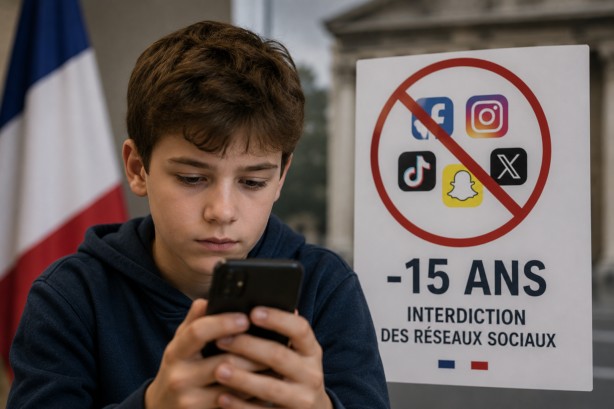
In a pioneering move within the European Union, France has enacted a new law prohibiting children younger than 15 from accessing social media platforms. This legislation, designed to bolster online safety, has garnered strong support from President Emmanuel Macron. Starting September 1, social media companies will be required to block users under 15 from registering new accounts, while existing accounts for this age group must be terminated by January 2027 through enforced age verification systems.
The responsibility for implementing these restrictions lies with the social media companies themselves, which are tasked with establishing age-verification mechanisms that also safeguard users’ personal information. In addition to the social media ban, the law introduces a prohibition on mobile phone usage in high schools, effective from the beginning of the upcoming academic year. However, the ban does not extend to educational websites and online encyclopedias, allowing these resources to remain accessible to students.
Proponents of this legislation argue it is a crucial measure to shield children from the potential negative impacts of excessive social media engagement on mental health. On the other hand, critics voice concerns over privacy issues, the practical challenges of enforcing the law, and the possibility that tech-savvy children might find ways to circumvent age-verification processes.
Meanwhile, the European Commission is exploring the possibility of implementing broader measures across the EU to enhance the safety of children online. As part of this initiative, a digital age-verification tool is currently being tested in several member countries.
France’s decision reflects a growing international trend toward tighter regulation of children’s social media access. This step highlights the increasing awareness and action being taken worldwide to address the potential risks associated with unrestricted online activity for minors.