
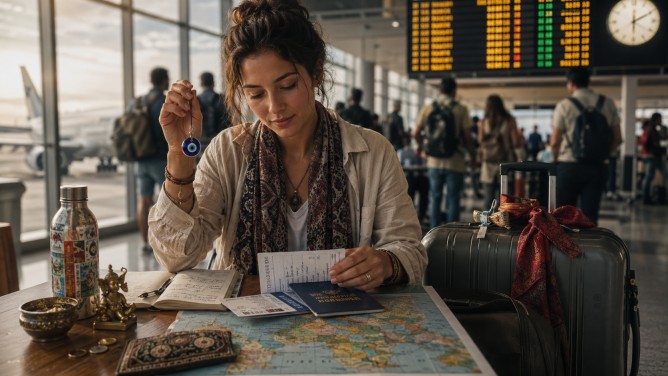
Travel, a venture filled with excitement and anticipation, often includes unique customs and rituals aimed at ensuring a smooth journey. Across the globe, various cultures embrace fascinating superstitions believed to bring good fortune and protect travellers. These practices, rooted in tradition, vary widely yet share a common purpose: to safeguard those embarking on a trip.
In the Balkans, garlic is more than just a culinary staple; it is a symbol of protection. Travellers from this region often tuck a clove of garlic into their luggage, trusting it will ward off negative energy and shield them from misfortune while on their journey. Similarly, some travellers have developed the habit of physically touching or tapping an aircraft’s exterior before boarding. This gesture, embraced by many as a good luck charm, also serves as a comforting ritual for those anxious about flying.
Starting a journey on the right foot is not merely a figure of speech for some; it is a literal practice. Stepping onto an airplane with the right foot first is regarded as an auspicious way to embark on a trip, welcoming positive energy and good fortune. Meanwhile, in parts of the Middle East and Balkans, families may pour or sprinkle water behind a departing traveller. This act symbolizes the hope for a smooth journey and a safe return, with the flowing water representing an obstacle-free path.
Superstitions around numbers also play a significant role in travel customs. In Western cultures, the number 13 is often avoided due to its unlucky connotations. Conversely, in China, the number 4 is shunned because it sounds similar to the word for death. Italian traditions include a wariness of the number 17. These beliefs can influence everything from hotel room assignments to the design of building floors. Additionally, in Slavic tradition, sitting on one’s packed luggage before leaving is a common practice. This brief pause allows travellers to gather their thoughts and mentally prepare for their journey.
Certain actions are avoided altogether, such as sweeping the floor immediately after someone departs. In several cultures, this is considered bad luck, as it could metaphorically sweep away the traveller’s good fortune or hinder their safe return. While these customs lack scientific validation, they remain an integral part of travel culture, offering a sense of continuity and cultural identity. For many, these rituals are cherished as part of family traditions and the exhilarating experience of setting out on a new adventure.